Mazzaroppi

Antonio Mazzaroppi

Antonio Mazzaroppi


The glass is removed from the tempering furnace once the process is complete, and everything appears to be in perfect condition. However, upon closer inspection, you realise that something is amiss: distorted reflections and undulations affecting the flatness of the surface. In short, the result is nothing like what was expected, and the sheet has to be discarded.

In many cases, the culprit is roller wave, a defect that originates inside the furnace during tempering and which unfortunately becomes apparent due to suboptimal handling.

Have you ever experienced this nightmare? If so, you certainly wouldn’t want it to happen again: having to discard sheets, wasting material and time on unexpected rework, and losing customers’ confidence in your work while they wait.

However, you can avoid all these problems by using specialised technologies to minimise the risk of tempering defects on glass sheets. Such technologies are found in Mazzaroppi furnaces.

What is a roller wave?

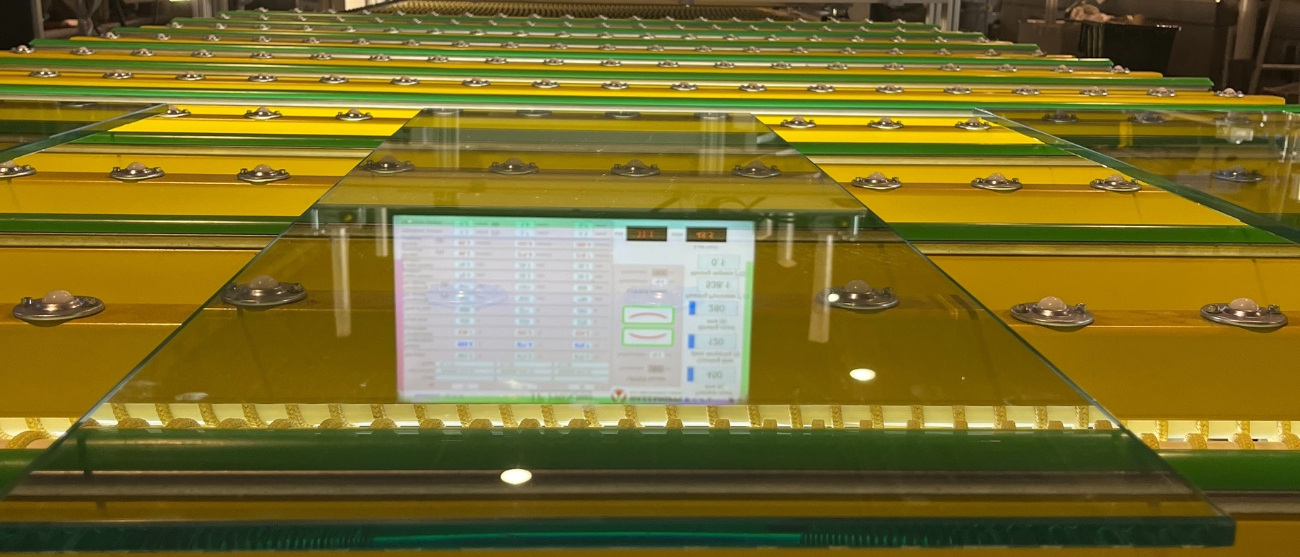
It is a surface undulation that forms on glass during the tempering process. It is not a random or unpredictable defect; rather, it is the direct result of the way the glass behaves when it is in a plastic state, i.e. at a high temperature, as it flows over the furnace’s transport rollers.

At this stage, the glass is extremely malleable. Local differences in pressure, temperature and speed between the rollers and the sheet of glass cause micro-bends to form, which repeat along the direction of travel. In the most severe cases, the result is visible to the naked eye: optical distortions, loss of flatness and altered reflections.

However, roller wave is not merely an aesthetic defect. It has tangible consequences for product quality and regulatory compliance. The European standard EN 12150-1, which governs toughened glass for the construction industry, includes a section dedicated to measuring roller wave and establishes maximum permissible values. Glass exceeding these limits is not considered compliant.

Roller wave is particularly critical in applications where optical quality is under constant scrutiny, such as curtain walls and structural glazing. In these contexts, the distorted reflection is visible to anyone passing by the building. Similarly, in high-end windows and interior glass features, aesthetic appeal is an integral part of the product, so such an imperfection would be unacceptable to the end customer. Finally, in automotive and display glass, optical tolerances are even more stringent. In all these contexts, glass with visible roller wave is not just imperfect; it is unsaleable.

Come si elimina il roller wave vetro

So, how is roller wave detected?

This is not always straightforward: at first glance, the sheet may appear intact, and the defect only becomes apparent when the surface is observed at the correct angle or using specialised instruments.

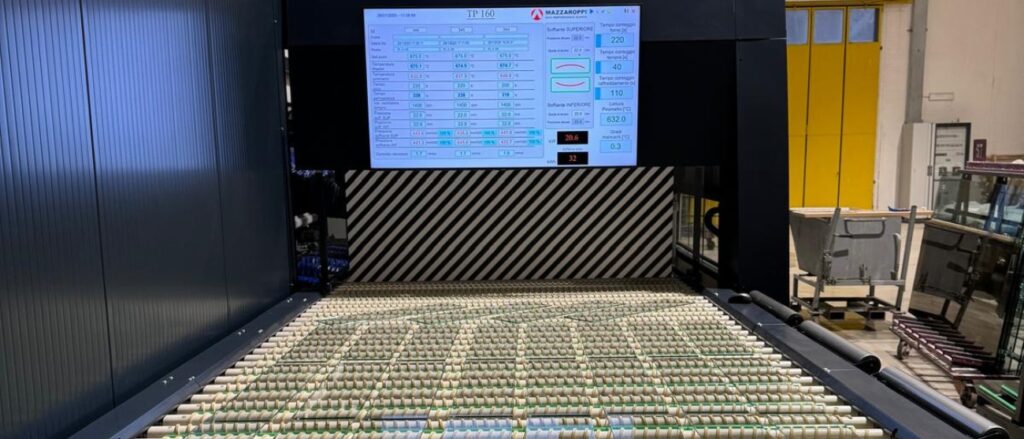
This is why Mazzaroppi systems are equipped with a zebra-striped optical panel at the furnace exit. This high-contrast striped pattern reflects on the surface of the sheet and reveals optical distortions and geometric deformations that would be invisible to the naked eye. This is a non-destructive, practical and particularly useful method of monitoring continuous production.

For those looking to go beyond visual inspection, Mazzaroppi systems can be integrated with automatic end-of-line scanners that can measure flatness, deformation and optical distortion in real time. This data can then be linked to systems that monitor the furnace’s operating parameters, thereby transforming quality control into a continuous, automated and traceable process. This ensures process repeatability and consistent quality standards.

Come si elimina il roller wave mazzaroppi

Mazzaroppi’s technological solution to the roller wave problem comes into play at the most critical moment of the process

Mazzaroppi furnaces feature an intelligent, integrated glass handling control system based on continuously variable kinematics, which is capable of self-adjusting throughout the entire process cycle. The system does not use fixed parameters set in advance; it adapts in real time to the specific characteristics of each sheet of glass, such as type and thickness, by dynamically modifying accelerations, speeds and movement profiles.

All of this is made possible by high-precision servo motors, which enable precise control of each stage of the handling process. This control is particularly important during stages when the glass is at a high temperature and the risk of viscous deformation is greatest, as the sheet is most vulnerable at this point as it passes over the transport rollers.

The principle is simple: if micro-deflections causing roller wave arise from variations in pressure, speed and temperature between the roller and the glass, the solution is to ensure smooth, continuous, adaptive movement. By applying real-time control cycle by cycle and sheet by sheet, the mechanical and thermal stresses responsible for the defect are significantly reduced, resulting in a tangible and measurable improvement in the flatness and optical quality of the toughened glass. The proprietary Mazzaroppi technology that achieves this is called M No Roll – Roller Wave Intelligent Setting and was designed and tested by the Mazzaroppi technical team. Reducing defects is the most effective way to add value to glass, avoid waste and complaints, and ensure the consistent excellent quality of the finished product.

To ensure you’re getting the best results from your tempering process and that your system is truly energy-efficient, contact the Mazzaroppi team for a free Energy Saving Check.

This analysis of your furnace’s energy performance will tell you how much you could save on your energy bills by choosing a Mazzaroppi solution. If you don’t yet have a furnace, the check will show you how quickly you can recoup your investment with a Mazzaroppi system thanks to its low energy consumption and excellent hardening results.

Call us to find out more.

Regular maintenance is essential to keep any equipment in perfect working order. For a glass tempering furnace, which is subjected to high thermal stress daily, regular checks are vital for ensuring optimal performance and a long lifespan.

If you have invested in a high-quality, long-lasting furnace, regular maintenance is what will enable it to support you in your work for decades.

Why is maintenance so important?

Good maintenance ensures:

  • uniform heating,
  • consistent quality of tempered glass,
  • safety for operators,
  • longer system life.

To achieve this, it is useful to plan daily, weekly and monthly checks, as well as more thorough inspections at regular intervals. Many of these activities can be carried out directly by operators and performing them consistently minimises the risk of machine downtime.

Daily checks:

Every day, it is important to:

  • Keep the furnace clean by removing dust and residues.
  • Check the ceramic rollers and internal surfaces.
  • Check operating parameters (temperature, pressure and ventilation).
  • Pay attention to any warning lights or alarms. Often, the manufacturer can intervene remotely to quickly resolve minor problems.

Weekly checks:

At longer intervals, it is necessary to:

  • Keep electrical panels clean and ventilated.
  • Check and replace air filters if necessary.

Monthly checks:

Every month (or every few months), it is recommended to:

  • Thoroughly clean the ceramic rollers.
  • Check the cooling section and remove any residues.
  • Check that the heating chamber is clean and, if necessary, remove any remaining glass residue.

Annual checks:

  • Lubricate gearboxes, motors and bearings according to the manufacturer’s instructions.
Come si fa la manutenzione del tuo forno per la tempra del vetro

Additional tips for maintaining the efficiency of your oven

  • Document every intervention, including the date, operators and activities carried out, as well as any anomalies found.
  • Assign clear responsibilities for each check: if it is not clear who is responsible for what, checks are likely to be skipped.
  • Raise awareness among operators during the installation phase.
  • Increase the frequency of inspections in dusty or particularly harsh environments.
  • Seal the furnace in case of prolonged downtime, and perform a complete check before restarting.

In order to require low maintenance, what should a glass tempering furnace be like?

A furnace designed to require little maintenance must:

  • be constructed of high-quality materials,
  • ensure uniform and accurate temperature control,
  • have robust mechanical, electrical and electronic components,
  • use efficient and adjustable cooling systems,
  • integrate intelligent remote control and monitoring systems.

The Mazzaroppi approach

At Mazzaroppi, we design and manufacture energy-efficient, long-lasting glass tempering furnaces. We use only the highest quality European materials and provide continuous assistance, both remotely and on site.

During installation:

  • we train operators on how to use the machinery and on maintenance procedures;
  • we set up production recipes;
  • we demonstrate all the necessary operations for smooth and safe use;
  • we remain in constant contact, both remotely and in person, to assist with any requirements.

We also carry out regular and ad hoc maintenance, as well as upgrading and revamping our systems for those who wish to improve performance after decades of operation.

Would you like a long-lasting tempering furnace?

Contact us today for more information — we’re always happy to help!

Purchasing a glass tempering furnace is a strategic decision that represents a significant milestone for any glassworks or company.

It not only raises your technological level, but also allows you to enter a more competitive market and offer new processes to customers.

For many businesses, it is a significant investment that requires careful consideration to avoid unpleasant surprises and ensure a quick and lasting return on investment. This is why it is important to carry out the necessary assessments before making a purchase.

So, what questions should you ask yourself before buying a glass tempering furnace? Here are the main aspects to consider.

Is building work required?

Many people think that installing a tempering oven inevitably involves invasive structural work, such as adapting the premises or changing the layout of production areas. While this may have been true of older generation ovens, today’s technology has advanced significantly.

A compact and carefully designed furnace, such as Mazzaroppi’s TP Compact, for example, can be installed in confined spaces without the need for building work or a supporting wall. This results in faster installation times, lower costs, and above all, fewer interruptions to ongoing production.

Do I need to rebuild the electrical cabinet?

The installed power is one of the most important factors to consider when purchasing a glass tempering furnace. Many traditional systems, particularly larger ones, require dedicated electrical cabinets and significant upgrades to the internal network. This can result in unexpected expenses and system downtime.

It can take up to a year before your furnace is operational, and this will require considerable additional expenditure.

The solution is to choose a furnace that operates at a low power level without compromising the quality of the tempering process. Thanks to specific, optimised software, it is now possible to limit power consumption peaks.

Mazzaroppi’s patented M Efficiency 5.0 software ensures that glass from 4 to 19 mm can be tempered with only 180 kW installed. This means the system can operate without requiring dedicated electrical cabinets, resulting in significant time and cost savings.

How much does it consume?

Consumption is a variable that directly affects the profitability of the investment. It is not enough to know how much the furnace consumes when it is ‘up and running’; you also need to assess its consumption when it is not producing.

For example, a furnace with a Start&Stop function can be turned off at the end of a shift and back on again in just half an hour. This avoids hidden costs associated with maintaining the temperature during periods of inactivity.

Additionally, an advanced convection management system adapts power consumption to the type of glass and percentage of oven filling, significantly reducing consumption. Meanwhile, rapid thickness change systems enable switching from 4 mm to 19 mm glass without lengthy downtime.

Is it user-friendly?

Unfortunately, the shortage of skilled labour is a widespread problem that cannot be ignored when deciding to purchase new machinery.

Although a tempering furnace is a complex machine, it can be designed to be user-friendly. This involves intuitive interfaces, preset cycles, rapid assistance and the ability to monitor parameters remotely.

A user-friendly furnace reduces operator errors, shortens staff training times, and ensures consistent product quality.

Do you think it’s impossible to find energy efficiency, ease of use and high performance in a single furnace? Fortunately, this is not the case.

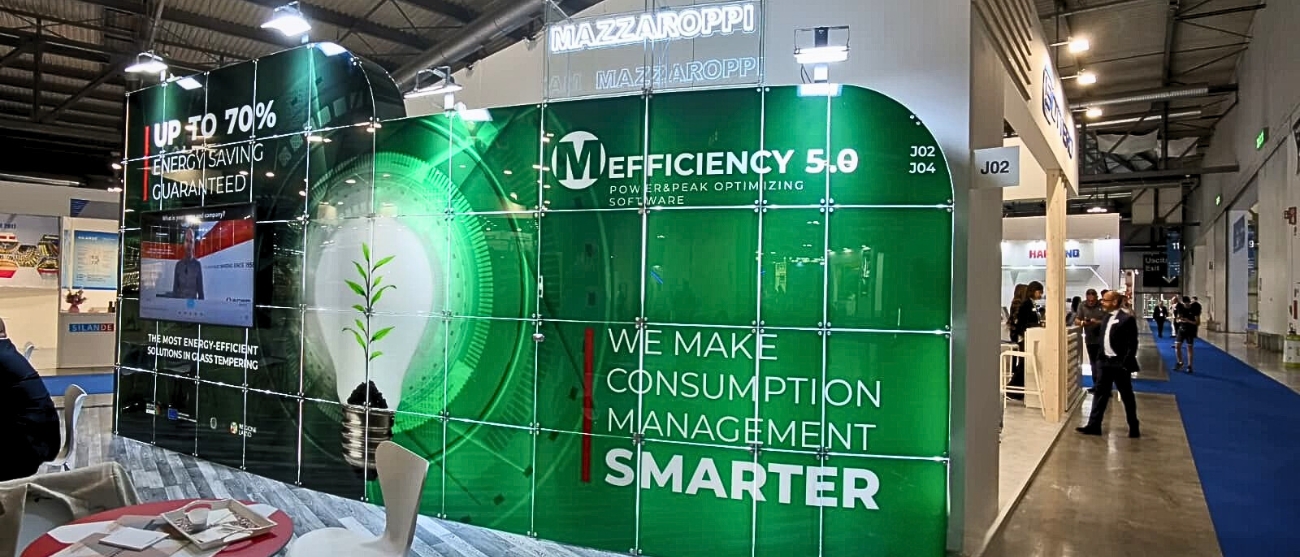
Mazzaroppi’s glass tempering solutions are the most energy-efficient on the market. They guarantee energy savings of up to 70% compared to competing furnaces while offering excellent performance and guaranteed ease of use.

We are committed to making tempering accessible and straightforward for glassworks and companies of all sizes, helping even the smallest businesses to grow and optimise their investment.

Would you like to find out more about our furnaces?

Call us with no obligation to ask your questions.

Every glass tempering furnace requires energy. However, not all furnaces have the same consumption levels. It is possible to reduce a furnace’s energy requirements without compromising the quality of the tempering process.

Peak power consumption control is therefore key to determining a system’s true level of efficiency.

This is why Mazzaroppi has developed M Efficiency 5.0: patented software designed to significantly reduce electrical power requirements during production, without compromising tempering quality.

This technology has the potential to transform the way companies organise their production.

The impact of energy peaks in glass tempering

During the tempering cycle, the glass is heated rapidly to temperatures above 600 °C. This requires the heating elements to be activated intensely, particularly in the initial phase. The furnace therefore quickly reaches its maximum available power, generating high absorption peaks.

The problems associated with these peaks are real:

  • higher energy bills, due to more expensive consumption bands,
  • the need for dedicated electrical substations or high installed power,
  • risks of instability in the company’s electrical network, especially in multi-service environments.

Without an intelligent peak regulation system, consumption can skyrocket. M Efficiency 5.0 was created precisely to address this issue, working efficiently to limit energy peaks and make the oven more sustainable.

How does M Efficiency 5.0 work?

It is patented software that is integrated into Mazzaroppi glass tempering furnaces.

It operates on the principle of using only the necessary amount of energy, in the necessary place and at the necessary time.

Mazzaroppi’s M Efficiency 5.0:

  • Drastically reduces the electrical system required, even eliminating the need for a dedicated electrical cabinet.
  • Allows you to select the peak power based on the type of production.
  • Optimises consumption during all phases of the cycle, enabling tempering with as little as 180 kW.
  • Ensures smarter, more uniform heating of the sheets for improved tempering quality and reduced consumption.

The result is a more linear energy consumption profile that is free of unnecessary peaks and therefore much more economical and manageable. This means that Mazzaroppi furnaces consume up to 70% less energy than competing solutions.

This is a system designed for flexible production.

Thanks to M Efficiency 5.0, glassworks and other companies can achieve significant energy savings, even when working with glass of different types, thicknesses and sizes.

Mazzaroppi furnaces are versatile thanks to their integration with other proprietary technological solutions developed by the company, such as:

  • M Start&Stop JIT Ignition: Reaching the operating temperature in 1 hour, allowing the furnace to be switched off at the end of the shift and restarted in less than 30 minutes, eliminating unproductive consumption.
  • M OptiConvection: the optimised convection process that uses hot air only in the portion of the furnace where the glass is located, adapting to the percentage of space occupied in order to achieve superior tempering quality with significantly lower consumption.
  • The M Adapt Thickness Change Responsive System is the technology that ensures responsive thickness change, reducing unproductive waiting times to zero. This makes Mazzaroppi furnaces fast and flexible when it comes to changing the thickness of the batch and the type of glass. This can be done consecutively and without waiting times. This greatly increases company productivity because it frees glassworks from having to temper identical glass formats consecutively, making production more flexible.

The combination of this technology and others makes every Mazzaroppi furnace an excellent production tool and an ally in cost management, process optimisation, and compliance with the most advanced energy standards.


Would you like to learn more about our new, patented M Efficiency 5.0 software?

Call us with no obligation to ask your questions.

An inefficient transition between different glass formats can cause real problems during the tempering process. It’s not just a matter of wasting time; unfortunately, there are real risks to the success of the process, which could be irreparably compromised.

So, how can these problems be avoided? The answer lies in choosing a glass tempering furnace that is optimised for smooth and fast format changes.

Here are the main risks that can be avoided with this type of furnace.

The management problems of a format change that is too slow…

First, let’s address the critical issues related to your production rates. As you are aware, if a cog jams, it can disrupt all the programmes in your production ‘machine’.

If this problem is not an unexpected event, but rather a recurring risk — as is the case with a format change that is too slow — you will lose time and money with every hardening cycle.

Increased downtime

A slow format change reduces productivity, causing unnecessary machine downtime and slowing down overall production.

Need to temper only in series

If the format change takes too long, you cannot switch from one type of glass to another as and when required, but must schedule long series of identical glass tempering.

This reduces your flexibility.

Energy waste

While waiting to switch from one format to another, furnaces often remain on but are not producing, resulting in increased energy costs. If you find yourself in this situation all the time, it will certainly be noticeable on your bill.

Risk of operational errors

Working times that are too long can lead to carelessness or errors in parameter adjustment, which can result in defects in the tempered glass.

… and technical problems

The speed at which the format changes also has a direct impact on the quality of glass tempering.

Thermal unevenness

A slowdown in format change can result in the glass being heated unevenly. This increases the risk of spontaneous breakage or fragmentation defects.

Glass deformation

If the furnace is left inactive or on standby for too long between formats, and the glass is not heated or cooled evenly, it can become deformed, for example by warping or undulating. These imperfections affect the appearance, flatness and functionality of the final product, for example softening or optical distortion (e.g. distorted reflections on the glass).

Increase in surface defects

Inefficient format change management can introduce surface defects, such as scratches or inclusions, which act as trigger points for breakage during or after tempering.

Risk of accidents

If the glass has not been tempered correctly, it is more likely to break and endanger the safety of operators. Accidental breakage of a glass sheet can pose a serious danger to nearby workers.

A fast and safe changeover is essential to guarantee you a smooth and flexible production of your tempered glass, as well as to contain the consumption of your furnace.

Mazzaroppi’s ovens are the most energy-efficient on the market because they can assure you excellent tempering with consumption up to 70 percent lower than competing solutions – thanks to proprietary technologies designed and manufactured to optimize tempering yield and efficiency.

The M Adapt – Thickness Change Responsive System, for example, is a technology that ensures responsive thickness changes, eliminating unproductive waiting times. Mazzaroppi furnaces adapt quickly and flexibly to the production needs of glassworks and companies, enabling consecutive changes to the thickness of the batch or the type of glass without any waiting time.

The principle behind Mazzaroppi technology is simple: the furnace should adapt to the production needs of the moment by automatically changing the process parameters, rather than the company having to adapt to the furnace’s functionality.

This eliminates waiting times for format changes and reduces unproductive energy costs.

Would you like to know how much you could save with a truly energy-efficient glass tempering furnace?

Request Mazzaroppi’s free Energy Saving Check and we will show you how to guarantee up to 70% lower energy consumption than competing solutions, while avoiding material and time wastage and always achieving the best possible results.

Call us to find out more.

At the beginning of 2025, we completed a significant installation in Lombardy: a TP Compact oven for the family-run company Vetreria Aurora in Flero (BS).

We are pleased to share this experience as it demonstrates the potential of Mazzaroppi’s new patented Efficiency 5.0 software.

Who is Vetreria Aurora?

Founded and run by the Rossi family, Vetreria Aurora is a dynamic, quality-conscious company based in Brescia with 30 years’ experience in glass processing. They specialise in processing for the furniture, art and construction sectors. For them, installing our TP Compact is an important step towards more efficient and sustainable production.

The Mazzaroppi team was supported by our valuable local sales partner, Si.ste Trading, for the sale and installation of the furnace.

Why did Vetreria Aurora choose the TP Compact furnace?

The deciding factor in Vetreria Aurora’s purchase of the furnace was its low energy consumption.

Thanks to Mazzaroppi’s new patented Efficiency 5.0 software, we can actually keep peaks to a minimum.

Efficiency 5.0:

  • Drastically reduces the electrical installation required.
  • Allows you to select peak power depending on the production type.
  • Maximises consumption during all phases of the cycle.
  • Ensures even more intelligent and uniform heating of the plates.

All Mazzaroppi furnaces with Efficiency 5.0 improve productivity and hardening quality, with energy consumption up to 70% lower than competing products.

Mazzaroppi case history un TP Compact custom per Vetreria Aurora 2

The Mazzaroppi solution

Vetreria Aurora has chosen the TP Compact oven, a 1600×3600 mm convection model that is perfect for handling all types of glass, including low-e. The TP Compact is a high performance, compact oven that can be easily installed and does not require a wall to lean against, thus eliminating the need for costly masonry work.

However, it is the oven’s technological heart that really sets this project apart: our new patented Efficiency 5.0 software.

Thanks to this innovation, we were able to guarantee the high performance typical of Mazzaroppi ovens while keeping the maximum installed power to a minimum at just 180 kW.

Despite the reduced power, Vetreria Aurora’s TP Compact can still temper glass from 4 to 19 mm thick.

There was also no need to install a dedicated electrical cabinet, which was advantageous for the company. Currently, Vetreria Aurora’s TP Compact is the only oven in Lombardy that operates without a dedicated electrical cabinet.

Which tempering furnace can elevate your work without increasing your energy consumption?

Call us today to find out more.

Have you invested in a high-quality glass tempering furnace? From an economic point of view, you have certainly made a good choice: such a furnace guarantees you a long service life and high performance.

However, after a few decades of use, you may need to ask a little more of your furnace. And thinking about a refurbishment might be another good choice.

What is revamping and who can do it?

Revamping a glass tempering furnace is a process of renovation and modernisation to improve its efficiency, performance and lifetime.

It may involve the replacement of obsolete components with more modern solutions, with the aim of improving the energy efficiency, safety and productivity of the furnace. A thorough analysis of the furnace must be carried out prior to any refurbishment to identify any critical issues and to assess the performance that can be achieved with the work to be carried out.

Once the kiln has undergone this ‘repowering’, its life cycle can be significantly extended, bringing forward the need for a new installation by a few years.

Who should you turn to when you need to upgrade your oven? The best choice is always to speak to the manufacturer themselves, if they offer this type of service.

If your oven was bought from a manufacturer who designs and manufactures the machines, if it was built with high quality raw materials and robust technology, you may be surprised at how much a refurbishment can ‘rejuvenate’ it.

The most common refurbishment interventions

The refurbishment of glass furnaces can involve several elements of the machinery. Here are some of the most common interventions that can revolutionise the current performance of your furnace:

  • Modernisation of electrical components: is your furnace very old? Then it is possible that some components are no longer on the market. If they no longer work properly, it is better to replace them with compatible ones. This can improve the performance of the stove and reduce consumption.
  • Replacement of mechanical elements: it is possible that after decades of intensive use, some of the mechanical components of your hardening furnace are worn out. For example, you can replace the rollers of the various sections that make up the machine, some of the heating elements in the heating chamber, the motors that move the various zones, and other elements.
  • Upgrading the electronics: you can equip your oven with new software to give it new functions and also optimise its consumption. Integration with remote monitoring and data analysis systems is also possible.
  • Add convection: does your current oven lack convection technology? With an upgrade, you can add this capability and expand your production to include additional types of glass, such as all types of low-e glass.

Once your furnace has been refurbished, you will have a machine that is more reliable by reducing the risk of breakdowns, but above all it will be more efficient: more modern components and software will reduce energy consumption and optimise productivity, or even allow you to expand your range to include new products.

How do you assess the refurbishment of your furnace?

The refurbishment of a hardening furnace is a strategic investment, but the key to its success is an accurate assessment of the current state of the machine and a clear definition of the objectives of the intervention.

Before intervening, it is essential to analyse the condition of the furnace on the basis of parameters such as

  • Age of the equipment: how old is it? Are its components still on the market?
  • Energy efficiency: is there heat loss? Is the consumption too high compared to the expected consumption?
  • Accuracy of process parameters: does the furnace maintain the correct temperatures and cycles, or are there variations?
  • Reliability and maintenance: are breakdowns or stoppages frequent? Has routine maintenance always been carried out correctly?
  • Safety and regulatory compliance: does the furnace meet the latest regulations or is it in need of upgrading?

Once the assessment is complete, a report must be drawn up with critical points and possible actions to be taken, prioritised according to the objectives to be achieved, which may be to reduce consumption, increase productivity, improve tempering quality, etc. The report will also show the performance that can be achieved thanks to the interventions carried out.

At Mazzaroppi we design and build glass tempering furnaces that last for decades. In order to keep our equipment at the top of its game, we also carry out more or less extensive upgrades on our machines.

Would you like to know how you can take your tempering furnace to a higher level of performance?

Give us a call to find out more.

Cameo Glass is an important British company specialising in the production of customised glass solutions. For its site in Swindon, about an hour and a half from London, it chose a Mazzaroppi TP Compact furnace. A choice that makes us proud and that guarantees Cameo Glass UK several advantages.

Who is Cameo Glass?

Cameo Glass has two important things in common with Mazzaroppi: its specialisation in the glass sector and the fact that it is a family business. Since 1994 it has been producing tempered glass, lacquered glass and high-precision custom-made glass products.

For the sale and installation of the furnace, the Mazzaroppi team worked with the company’s official UK distributor, Stone and Glass Group.

Why did Cameo Glass choose the TP Compact?

The company chose a 1.9 m x 3.6 m TP Compact oven with convection.

This allowed Cameo Glass to:

  • Replace its old tempering furnace with a larger model: The TP Compact is more compact, so although it is larger than the previous machine, it can be installed in the same space without requiring any adaptations or brickwork.
  • Using the same electrical cabinets as the old furnace: TP Compact uses the same power as the previous machine, so there was no need to adapt the equipment. The new Mazzaroppi kiln was commissioned with a total installed power of only 315 KW.
  • Record energy savings: compared to its predecessor, TP Compact has drastically reduced the company’s consumption and therefore its operating costs.
  • Optimising production: TP Compact’s ease of use has made it easier for the company to set new quality standards.
  • Having a furnace up and running in just 10 days: the installation was carried out over the Christmas period, allowing Cameo Glass to resume operations at the beginning of January. Even before the installation was complete, the furnace could be used for tempering and it worked perfectly.

The Mazzaroppi solution

The TP Compact furnace chosen by Cameo Glass is equipped with a new patented Mazzaroppi technology.

Thanks to this patent, the furnace guarantees an exceptional reduction in consumption peaks, thus significantly reducing energy consumption and, like all Mazzaroppi solutions, guaranteeing perfect tempering results.

This new technology joins others that have made Mazzaroppi furnaces the ideal choice for glassworks and companies of all sizes, such as:

  • M Start&Stop function, which allows the furnace to be switched off every evening and restarted in just half an hour, reducing production consumption.
  • M OptiConvection, the latest generation convection system.
  • M Adapt, which ensures a responsive thickness change system with no waiting time.

Cameo Glass is delighted with their choice and we at Mazzaroppi are proud to have contributed to increasing their productivity while reducing their energy consumption.

What is the furnace that can revolutionise your work?

Give us a call to find out more.

Glasstec 2024, held in Düsseldorf in October, was an opportunity for even the most sceptical to see the efficiency of Mazzaroppi furnaces in action: we brought a fully functional TP Compact furnace to our stand and demonstrated that it is possible to temper glass to perfection with just 180 KW of power!

Glass tempering has always been considered an extremely energy-intensive process. And it is precisely this belief that often leads glassworks and smaller companies not to have their own furnace, relying on external suppliers for tempering and thus losing out in terms of operational autonomy.

Fortunately, there is no need to equip yourself with a large electrical cabinet and spend a fortune on bills to temper glass at home. That is, if you choose a highly energy-efficient Mazzaroppi furnace.

The secret of energy-efficient glass tempering lies in technology: here are the innovative features and tricks that can reduce consumption without compromising the quality of the result.

1. Breakdown of total consumption

There is productive and non-productive consumption: both contribute to the total balance of energy required by the furnace for quenching.

In addition to what the machine consumes during production, any ‘idle’ consumption must also be taken into account. For example, if the furnace is left on at night or when it is not in use, all the energy required to keep it ready for quenching is wasted.

What can be done to avoid this type of consumption, which only represents a cost to the company?

Equipping a furnace that can start up and reach curing temperature very quickly reduces idle time. This is because the furnace can be easily switched off when it is no longer needed, without slowing down the work when it is restarted: thanks to the M Start&Stop ignition technology, Mazzaroppi furnaces can reach a temperature of 680° in just 30 minutes. This means that even small/medium-sized glassworks and companies that do not work night shifts can safely switch off the furnace at the end of the day and start it up again the next morning at full speed, avoiding leaving it on all the time and increasing the energy bill for wasted energy.

In order to absorb large and continuous temperature fluctuations, just-in-time ovens are built with low-absorption materials and low internal thermal mass.

2. Containing the energy peak

In order to contain the peak energy consumption of the oven, it is necessary to have advanced systems that allow very low dissipation and focus on increasing efficiency.

An oven equipped with software that guarantees this type of functionality can consume up to 70% less energy than less innovative solutions.

The deviation of the peak power, i.e. the maximum power required by the kiln, from the average power is reduced, while at the same time ensuring optimal temperature control of the kiln. As a result, 180 KW of power is sufficient to temper glass to perfection.

3. Optimising the heating of individual areas of the furnace

When tempering glass, one of the main causes of wasted energy is that portions of the furnace are also heated that are not occupied by the glass at that precise moment.

In order to optimise heat distribution, advanced software is required, which is able to recognise the exact portion of the furnace in which the glass is located and use the hot air only in that area, also adapting it to the percentage of occupied space.

On the contrary, management software, such as Mazzaroppi’s M Opticonvection, is designed to achieve superior hardening quality while reducing consumption to levels unimaginable with other solutions on the market.

They are based on complex algorithms that take into account many variables, with the ultimate aim of guaranteeing an incredibly favourable ratio between consumption and hardening quality.

In short, to reduce energy consumption and therefore the environmental and economic impact of tempering, it is necessary to heat the glass, not the furnace.

Is your tempering furnace really energy efficient?

Or do you rely on a third party to do the tempering because you think it would cost you too much to keep a furnace running?

Ask for the free Mazzaroppi Energy Saving Check and we will tell you how much you could save with the most energy efficient solutions on the market! Mazzaroppi furnaces can guarantee you up to 70% less energy consumption than competing solutions.

What size companies choose TP Compact, the compact oven from Mazzaroppi? There is no single answer to this question: TP Compact is so versatile and high-performance that it adapts to the needs of glassworks and also to those of large companies.

An example of this is the European group Vandaglas, with offices throughout Europe, which chose TP Compact for its Austrian headquarters.

Who is Vandaglas?

The group produces high quality insulating glass and interior glass in all possible shapes and sizes and is active in its locations in the Netherlands, Germany, Switzerland, England and, indeed, Austria, although its products are used worldwide for architectural façades and design projects. With more than 900 employees, it has to date realised more than 10,000 façade projects in over 50 countries worldwide.

‘We put all our efforts into our future,’ says Managing Director Nicolas Alexander Lahodny, ‘and that is why we are very pleased with the investment made in our Heidenreichstein site with the purchase of the new TP Compact. We are looking forward to delivering our first in-house tempered glass to our customers!’.

Why did Vandaglas choose TP Compact?

A globally established company needs an oven capable of ensuring a level of performance excellence. But it is not only this that determines the choice of the right tempering furnace for its needs.

In particular, Vandaglass needed:

  • reduced electrical installation: this was their fundamental problem, as they needed to avoid having to redo the entire electrical installation. This would not only have required a particularly large financial investment, but also a good three years to complete.
  • limited production consumption: to keep labour costs at an appropriate level.
  • limited floor space occupied: they wanted to make the best use of the available company space.
  • quality of tempering: they were not willing to compromise on the yield of their final product.
  • ease of use of the furnace: for every company today it is essential to have equipment that can be operated even by non-highly specialised personnel and always give excellent results.

Thanks to discussions with the Head of Group Process Engineering at Vandaglas, Guillaume Kaminski, we finalised the choice of the best oven to meet all these needs, after an analysis and testing phase that also took place in part at Mazzaroppi’s Aprilia site, near Rome.

The Mazzaroppi solution

TP Compact meets all the requirements expressed by the company. The model chosen for Vandaglas is 1.9×3.6 metres in size, with convection for low-e, i.e. low-emissivity glass.

In addition, installation and testing took place on schedule, thanks to the valuable collaboration of Site Manager Mario Müllauer and Head of Group Process Engineering Guillaume Kaminski.

The compact, high-performance furnace from Mazzaroppi meets all the quality requirements imposed by Vandaglas, to the full satisfaction of the company, which can now:

  • Temper glass in-house with up to 70% lower consumption than other tempering furnaces.
  • Have an oven that is always ready, because TP Compact goes from 0 to 680° C in one hour.
  • Eliminate unproductive costs, because TP Compact can be switched off every night and the day after the first start-up it can reach temperature in half an hour.

Would you also like to know if there is a tempering furnace that can revolutionise your work too?

We’ll tell you: ask for a free Mazzaroppi Energy Saving Check and discover the solution for you, perfectly adaptable to your space and in line with the consumption you do not want to exceed.