Mazzaroppi

Advice and information to make glass tempering energy-efficient

Advice and information to make glass tempering energy-efficient


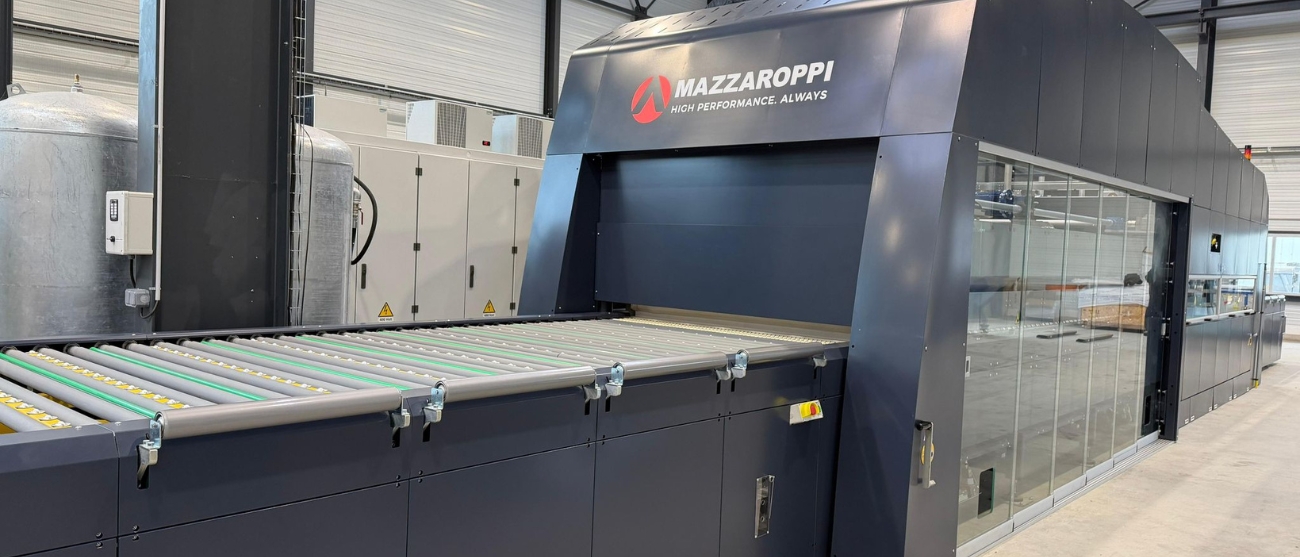
The first operational Mazzaroppi tempering furnace in France is located at Glaverouest’s site in Yffiniac, a town in the Côtes-d’Armor department of Brittany.

 Miroteire Glaverouest is a company that has grown over time and embraces new challenges. In a nutshell, this is how we might describe this glass processing firm, which holds a very important distinction for us. Thanks to this investment, the company can now guarantee high-quality standards and reliable delivery times without paying exorbitant energy bills or relying on external suppliers.

So, who is Glaverouest?

“We work closely with construction professionals, architects, and interior designers to provide innovative, bespoke glass solutions,” explains Eric Lauvoisard, one of the two co-directors of Miroiterie Glaverouest, alongside Jean-Michel Duprey. “Our products feature in a wide range of projects, from the construction of modern buildings, to the renovation of historic homes, and the fitting out of commercial spaces.”

Glaverouest offers a wide range of services and specialises in bespoke projects with rapid delivery. The company operates from three sites in north-western France.

In 2025, significant investments were made in process optimisation to improve quality and production capacity, modernise IT systems and reduce the environmental footprint. Against this backdrop of innovation and growth, Glaverouest launched its first glass tempering activity at the Yffiniac plant (Miroiterie Glaverouest 22) in January 2026, with the purchase of the new TP Compact.

Alongside the TP Compact, Mazzaroppi also supplied a 2000×4000 Heat Soak Test machine.

Why did Glaverouest choose the TP Compact?

The company opted for a state-of-the-art tempering furnace designed specifically to meet the needs of small and medium-sized glassworks seeking to become self-sufficient in production.

Quentin Lauvoisard, Eric’s son and head of the Yffiniac site, explains the purchase: ‘The aim was to bring the entire value chain in-house, ensuring glass tempering for both our own use and that of our future manufacturing clients. There are few operators specialising in tempering in the region, so this investment will allow us to offer a valuable service to local glaziers. We can now offer local glaziers greater responsiveness and an attractive, locally manufactured product.’

Glaverouest’s TP Compact is designed to help innovative and dynamic companies grow and to create new opportunities in the local area. It can therefore create shared value across the region.

The Mazzaroppi solution

Glaverouest had four specific requirements:

  • a machine with low energy consumption and consequently low running costs throughout its operational life
  • a machine requiring very low electrical power
  • a reliable, high-quality machine that requires little maintenance
  • a machine that was easy to use.

The TP Compact was chosen, partly thanks to the collaboration of Mazzaroppi’s exclusive French agent, CVMI France, who helped guide Glaverouest towards the most suitable solution.

The chosen TP Compact model measures 1600×3200(3600)x4 mm with convection, enabling the tempering of all low-emissivity glass. Thus, despite having no prior experience, the company has become a producer of tempered glass because it chose a user-friendly solution designed for ‘easy’ tempering as its first furnace.

Glaverouest has achieved a number of benefits:

  • 100% independence in the production process: they no longer need to rely on external partners and can organise production independently.
  • High quality standards and reliable delivery times, which will help attract new customers.
  • The ability to expand the product range and increase productivity to support business growth.
  • A significant reduction in costs: the production costs of hardened products are much lower than the previous purchase costs.
  • Low running costs throughout the machine’s lifespan thanks to reduced energy consumption and low maintenance requirements.

Are you considering buying a hardening furnace, but worried that it might be complicated to use and maintain, or that you’ll need a large electrical substation?

Call us today, with no obligation, to find out how you can avoid these difficulties and achieve the best hardening results.

The complexity of managing and carrying out the process does not have to be an inevitable burden. In fact, when technology is intelligently designed, it can become a smooth and reliable operation, even for smaller businesses that lack a large number of specialised operators — or none at all.

Mazzaroppi’s ‘easy tempering’ philosophy stems from this vision: our technologies are designed and built to simplify the management of glass tempering, making it accessible to an ever-increasing number of production facilities, ranging from small glassworks to large companies. Simplifying does not mean trivialising, of course. In an industrial context, it means reducing the margin for error, optimising times and making processes more consistent and less dependent on individual skills. In other words, it makes the work more robust.

If you’re a small artisan glasswork looking to expand, an established company wishing to bring production in-house or a large organisation interested in launching a new business unit, Mazzaroppi’s solutions can help you temper glass efficiently without complicating matters.

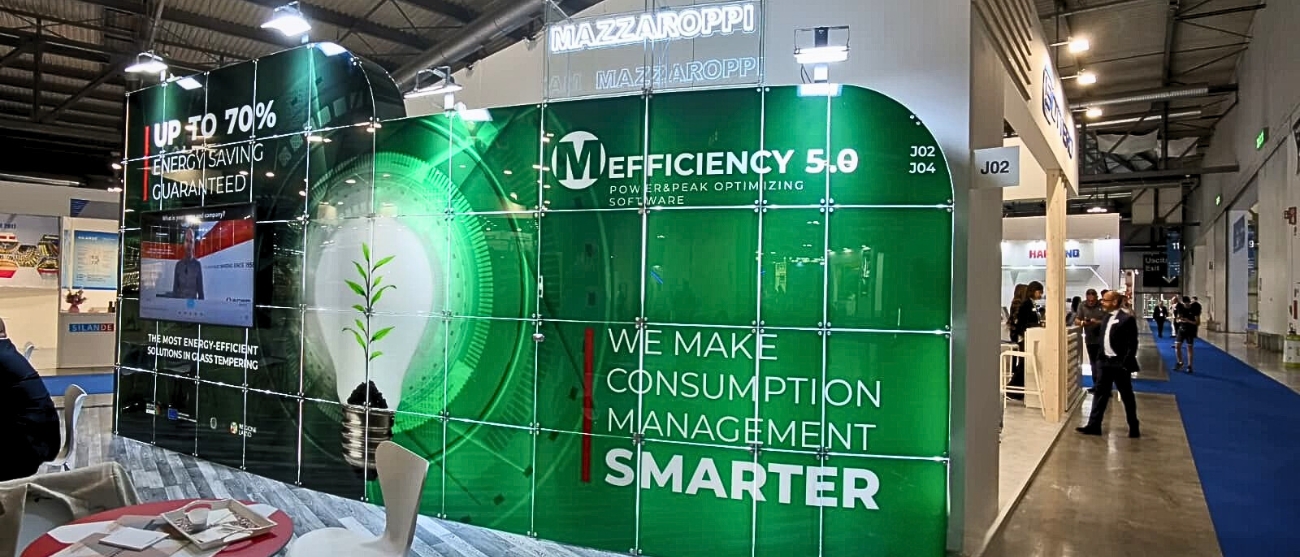
For Mazzaroppi, innovation is about simplifying processes, not adding complexity. Every furnace is designed to assist the user, not test them. One example is the M Efficiency 5.0 software, which is patented and intelligently manages energy consumption throughout all stages of the tempering cycle, optimising peaks.

The ability to modulate power peaks according to the type of production not only reduces energy bills but also ensures more uniform heating of the sheets. The result is twofold: consistent quality of the toughened glass and greater economic sustainability of the process. There is less waste and fewer variables to monitor, and the quality of the toughened glass is more consistent.

Furnaces designed for the people who use them

A tempering furnace may seem simple to use, but this can change when production or the on-shift operator changes.

In today’s glassworks, it is not always possible to rely on highly specialised operators for every shift. This is why Mazzaroppi furnaces are designed with clear control systems and intuitive interfaces. This allows different processes to be managed with minimal need for constant parameter adjustments.

Therefore, tempering glass of different thicknesses and types does not require complex procedures or constant manual adjustments. The aim is to enable operators to work safely and efficiently, reducing their reliance on experience and the risk of error, while protecting the company from unexpected production stoppages.

Simplification starts with listening

Technology alone is not always enough to ensure work runs smoothly. The human element remains essential, and a significant part of Mazzaroppi’s work occurs before and after the tempering process. Each system is installed and commissioned with direct on-site support at the glassworks or client premises. Technicians set basic recipes according to production requirements, train operators, and verify that furnaces are operating correctly on the production line.

The installation process is only considered complete once the system is operating in accordance with the client’s specified criteria. The furnace is configured to operate at its best under the specific conditions in which it is installed, rather than the glassworks having to adapt to the furnace. Even after commissioning, remote assistance enables rapid intervention when necessary thanks to precise and effective diagnostic systems. This ensures that every system is reliable, allowing staff to work with complete peace of mind.

Simplicity also means independence and cost savings

By simplifying the glass tempering process, companies can regain production independence and control over costs. Bringing tempering in-house enables companies to manage quality, lead times and order planning directly, thereby improving overall efficiency. However, to make this process accessible to all, it is also necessary to keep costs down by tackling unnecessary energy consumption.

Mazzaroppi furnaces drastically reduce unnecessary energy consumption thanks to technologies such as M Start&Stop – JIT Ignition and M Opticonvection, enabling the systems to consume up to 70% less energy than other solutions. Thus, ease of use translates into tangible savings and new opportunities for growth.

The M Start&Stop – JIT Ignition technology enables the oven to be switched off every evening after use and restarted quickly the following morning, becoming operational in under an hour. Meanwhile, the M Opticonvection – Optimised Convection Process technology ensures that hot air is only used in the section of the oven where the glass is located, adapting to the percentage of space occupied.

Thanks to innovations such as these, Mazzaroppi furnaces can temper glass with a power output of 180 kW without the need for a dedicated chamber.

Simplifying the process of glass tempering is no mean feat, given the highly complex and varied requirements involved. Mazzaroppi’s ‘easy tempering’ approach is based on maximum flexibility. Whatever your specific requirements — whether relating to production type, limited operating spaces or energy consumption — contact us to discover how our furnaces can simplify your processes.

Call us today to find out more.

The glass is removed from the tempering furnace once the process is complete, and everything appears to be in perfect condition. However, upon closer inspection, you realise that something is amiss: distorted reflections and undulations affecting the flatness of the surface. In short, the result is nothing like what was expected, and the sheet has to be discarded.

In many cases, the culprit is roller wave, a defect that originates inside the furnace during tempering and which unfortunately becomes apparent due to suboptimal handling.

Have you ever experienced this nightmare? If so, you certainly wouldn’t want it to happen again: having to discard sheets, wasting material and time on unexpected rework, and losing customers’ confidence in your work while they wait.

However, you can avoid all these problems by using specialised technologies to minimise the risk of tempering defects on glass sheets. Such technologies are found in Mazzaroppi furnaces.

What is a roller wave?

It is a surface undulation that forms on glass during the tempering process. It is not a random or unpredictable defect; rather, it is the direct result of the way the glass behaves when it is in a plastic state, i.e. at a high temperature, as it flows over the furnace’s transport rollers.

At this stage, the glass is extremely malleable. Local differences in pressure, temperature and speed between the rollers and the sheet of glass cause micro-bends to form, which repeat along the direction of travel. In the most severe cases, the result is visible to the naked eye: optical distortions, loss of flatness and altered reflections.

However, roller wave is not merely an aesthetic defect. It has tangible consequences for product quality and regulatory compliance. The European standard EN 12150-1, which governs toughened glass for the construction industry, includes a section dedicated to measuring roller wave and establishes maximum permissible values. Glass exceeding these limits is not considered compliant.

Roller wave is particularly critical in applications where optical quality is under constant scrutiny, such as curtain walls and structural glazing. In these contexts, the distorted reflection is visible to anyone passing by the building. Similarly, in high-end windows and interior glass features, aesthetic appeal is an integral part of the product, so such an imperfection would be unacceptable to the end customer. Finally, in automotive and display glass, optical tolerances are even more stringent. In all these contexts, glass with visible roller wave is not just imperfect; it is unsaleable.

Come si elimina il roller wave vetro

So, how is roller wave detected?

This is not always straightforward: at first glance, the sheet may appear intact, and the defect only becomes apparent when the surface is observed at the correct angle or using specialised instruments.

This is why Mazzaroppi systems are equipped with a zebra-striped optical panel at the furnace exit. This high-contrast striped pattern reflects on the surface of the sheet and reveals optical distortions and geometric deformations that would be invisible to the naked eye. This is a non-destructive, practical and particularly useful method of monitoring continuous production.

For those looking to go beyond visual inspection, Mazzaroppi systems can be integrated with automatic end-of-line scanners that can measure flatness, deformation and optical distortion in real time. This data can then be linked to systems that monitor the furnace’s operating parameters, thereby transforming quality control into a continuous, automated and traceable process. This ensures process repeatability and consistent quality standards.

Come si elimina il roller wave mazzaroppi

Mazzaroppi’s technological solution to the roller wave problem comes into play at the most critical moment of the process

Mazzaroppi furnaces feature an intelligent, integrated glass handling control system based on continuously variable kinematics, which is capable of self-adjusting throughout the entire process cycle. The system does not use fixed parameters set in advance; it adapts in real time to the specific characteristics of each sheet of glass, such as type and thickness, by dynamically modifying accelerations, speeds and movement profiles.

All of this is made possible by high-precision servo motors, which enable precise control of each stage of the handling process. This control is particularly important during stages when the glass is at a high temperature and the risk of viscous deformation is greatest, as the sheet is most vulnerable at this point as it passes over the transport rollers.

The principle is simple: if micro-deflections causing roller wave arise from variations in pressure, speed and temperature between the roller and the glass, the solution is to ensure smooth, continuous, adaptive movement. By applying real-time control cycle by cycle and sheet by sheet, the mechanical and thermal stresses responsible for the defect are significantly reduced, resulting in a tangible and measurable improvement in the flatness and optical quality of the toughened glass. The proprietary Mazzaroppi technology that achieves this is called M No Roll – Roller Wave Intelligent Setting and was designed and tested by the Mazzaroppi technical team. Reducing defects is the most effective way to add value to glass, avoid waste and complaints, and ensure the consistent excellent quality of the finished product.

To ensure you’re getting the best results from your tempering process and that your system is truly energy-efficient, contact the Mazzaroppi team for a free Energy Saving Check.

This analysis of your furnace’s energy performance will tell you how much you could save on your energy bills by choosing a Mazzaroppi solution. If you don’t yet have a furnace, the check will show you how quickly you can recoup your investment with a Mazzaroppi system thanks to its low energy consumption and excellent hardening results.

Call us to find out more.

Regular maintenance is essential to keep any equipment in perfect working order. For a glass tempering furnace, which is subjected to high thermal stress daily, regular checks are vital for ensuring optimal performance and a long lifespan.

If you have invested in a high-quality, long-lasting furnace, regular maintenance is what will enable it to support you in your work for decades.

Why is maintenance so important?

Good maintenance ensures:

  • uniform heating,
  • consistent quality of tempered glass,
  • safety for operators,
  • longer system life.

To achieve this, it is useful to plan daily, weekly and monthly checks, as well as more thorough inspections at regular intervals. Many of these activities can be carried out directly by operators and performing them consistently minimises the risk of machine downtime.

Daily checks:

Every day, it is important to:

  • Keep the furnace clean by removing dust and residues.
  • Check the ceramic rollers and internal surfaces.
  • Check operating parameters (temperature, pressure and ventilation).
  • Pay attention to any warning lights or alarms. Often, the manufacturer can intervene remotely to quickly resolve minor problems.

Weekly checks:

At longer intervals, it is necessary to:

  • Keep electrical panels clean and ventilated.
  • Check and replace air filters if necessary.

Monthly checks:

Every month (or every few months), it is recommended to:

  • Thoroughly clean the ceramic rollers.
  • Check the cooling section and remove any residues.
  • Check that the heating chamber is clean and, if necessary, remove any remaining glass residue.

Annual checks:

  • Lubricate gearboxes, motors and bearings according to the manufacturer’s instructions.
Come si fa la manutenzione del tuo forno per la tempra del vetro

Additional tips for maintaining the efficiency of your oven

  • Document every intervention, including the date, operators and activities carried out, as well as any anomalies found.
  • Assign clear responsibilities for each check: if it is not clear who is responsible for what, checks are likely to be skipped.
  • Raise awareness among operators during the installation phase.
  • Increase the frequency of inspections in dusty or particularly harsh environments.
  • Seal the furnace in case of prolonged downtime, and perform a complete check before restarting.

In order to require low maintenance, what should a glass tempering furnace be like?

A furnace designed to require little maintenance must:

  • be constructed of high-quality materials,
  • ensure uniform and accurate temperature control,
  • have robust mechanical, electrical and electronic components,
  • use efficient and adjustable cooling systems,
  • integrate intelligent remote control and monitoring systems.

The Mazzaroppi approach

At Mazzaroppi, we design and manufacture energy-efficient, long-lasting glass tempering furnaces. We use only the highest quality European materials and provide continuous assistance, both remotely and on site.

During installation:

  • we train operators on how to use the machinery and on maintenance procedures;
  • we set up production recipes;
  • we demonstrate all the necessary operations for smooth and safe use;
  • we remain in constant contact, both remotely and in person, to assist with any requirements.

We also carry out regular and ad hoc maintenance, as well as upgrading and revamping our systems for those who wish to improve performance after decades of operation.

Would you like a long-lasting tempering furnace?

Contact us today for more information — we’re always happy to help!

Purchasing a glass tempering furnace is a strategic decision that represents a significant milestone for any glassworks or company.

It not only raises your technological level, but also allows you to enter a more competitive market and offer new processes to customers.

For many businesses, it is a significant investment that requires careful consideration to avoid unpleasant surprises and ensure a quick and lasting return on investment. This is why it is important to carry out the necessary assessments before making a purchase.

So, what questions should you ask yourself before buying a glass tempering furnace? Here are the main aspects to consider.

Is building work required?

Many people think that installing a tempering oven inevitably involves invasive structural work, such as adapting the premises or changing the layout of production areas. While this may have been true of older generation ovens, today’s technology has advanced significantly.

A compact and carefully designed furnace, such as Mazzaroppi’s TP Compact, for example, can be installed in confined spaces without the need for building work or a supporting wall. This results in faster installation times, lower costs, and above all, fewer interruptions to ongoing production.

Do I need to rebuild the electrical cabinet?

The installed power is one of the most important factors to consider when purchasing a glass tempering furnace. Many traditional systems, particularly larger ones, require dedicated electrical cabinets and significant upgrades to the internal network. This can result in unexpected expenses and system downtime.

It can take up to a year before your furnace is operational, and this will require considerable additional expenditure.

The solution is to choose a furnace that operates at a low power level without compromising the quality of the tempering process. Thanks to specific, optimised software, it is now possible to limit power consumption peaks.

Mazzaroppi’s patented M Efficiency 5.0 software ensures that glass from 4 to 19 mm can be tempered with only 180 kW installed. This means the system can operate without requiring dedicated electrical cabinets, resulting in significant time and cost savings.

How much does it consume?

Consumption is a variable that directly affects the profitability of the investment. It is not enough to know how much the furnace consumes when it is ‘up and running’; you also need to assess its consumption when it is not producing.

For example, a furnace with a Start&Stop function can be turned off at the end of a shift and back on again in just half an hour. This avoids hidden costs associated with maintaining the temperature during periods of inactivity.

Additionally, an advanced convection management system adapts power consumption to the type of glass and percentage of oven filling, significantly reducing consumption. Meanwhile, rapid thickness change systems enable switching from 4 mm to 19 mm glass without lengthy downtime.

Is it user-friendly?

Unfortunately, the shortage of skilled labour is a widespread problem that cannot be ignored when deciding to purchase new machinery.

Although a tempering furnace is a complex machine, it can be designed to be user-friendly. This involves intuitive interfaces, preset cycles, rapid assistance and the ability to monitor parameters remotely.

A user-friendly furnace reduces operator errors, shortens staff training times, and ensures consistent product quality.

Do you think it’s impossible to find energy efficiency, ease of use and high performance in a single furnace? Fortunately, this is not the case.

Mazzaroppi’s glass tempering solutions are the most energy-efficient on the market. They guarantee energy savings of up to 70% compared to competing furnaces while offering excellent performance and guaranteed ease of use.

We are committed to making tempering accessible and straightforward for glassworks and companies of all sizes, helping even the smallest businesses to grow and optimise their investment.

Would you like to find out more about our furnaces?

Call us with no obligation to ask your questions.

Every glass tempering furnace requires energy. However, not all furnaces have the same consumption levels. It is possible to reduce a furnace’s energy requirements without compromising the quality of the tempering process.

Peak power consumption control is therefore key to determining a system’s true level of efficiency.

This is why Mazzaroppi has developed M Efficiency 5.0: patented software designed to significantly reduce electrical power requirements during production, without compromising tempering quality.

This technology has the potential to transform the way companies organise their production.

The impact of energy peaks in glass tempering

During the tempering cycle, the glass is heated rapidly to temperatures above 600 °C. This requires the heating elements to be activated intensely, particularly in the initial phase. The furnace therefore quickly reaches its maximum available power, generating high absorption peaks.

The problems associated with these peaks are real:

  • higher energy bills, due to more expensive consumption bands,
  • the need for dedicated electrical substations or high installed power,
  • risks of instability in the company’s electrical network, especially in multi-service environments.

Without an intelligent peak regulation system, consumption can skyrocket. M Efficiency 5.0 was created precisely to address this issue, working efficiently to limit energy peaks and make the oven more sustainable.

How does M Efficiency 5.0 work?

It is patented software that is integrated into Mazzaroppi glass tempering furnaces.

It operates on the principle of using only the necessary amount of energy, in the necessary place and at the necessary time.

Mazzaroppi’s M Efficiency 5.0:

  • Drastically reduces the electrical system required, even eliminating the need for a dedicated electrical cabinet.
  • Allows you to select the peak power based on the type of production.
  • Optimises consumption during all phases of the cycle, enabling tempering with as little as 180 kW.
  • Ensures smarter, more uniform heating of the sheets for improved tempering quality and reduced consumption.

The result is a more linear energy consumption profile that is free of unnecessary peaks and therefore much more economical and manageable. This means that Mazzaroppi furnaces consume up to 70% less energy than competing solutions.

This is a system designed for flexible production.

Thanks to M Efficiency 5.0, glassworks and other companies can achieve significant energy savings, even when working with glass of different types, thicknesses and sizes.

Mazzaroppi furnaces are versatile thanks to their integration with other proprietary technological solutions developed by the company, such as:

  • M Start&Stop JIT Ignition: Reaching the operating temperature in 1 hour, allowing the furnace to be switched off at the end of the shift and restarted in less than 30 minutes, eliminating unproductive consumption.
  • M OptiConvection: the optimised convection process that uses hot air only in the portion of the furnace where the glass is located, adapting to the percentage of space occupied in order to achieve superior tempering quality with significantly lower consumption.
  • The M Adapt Thickness Change Responsive System is the technology that ensures responsive thickness change, reducing unproductive waiting times to zero. This makes Mazzaroppi furnaces fast and flexible when it comes to changing the thickness of the batch and the type of glass. This can be done consecutively and without waiting times. This greatly increases company productivity because it frees glassworks from having to temper identical glass formats consecutively, making production more flexible.

The combination of this technology and others makes every Mazzaroppi furnace an excellent production tool and an ally in cost management, process optimisation, and compliance with the most advanced energy standards.


Would you like to learn more about our new, patented M Efficiency 5.0 software?

Call us with no obligation to ask your questions.